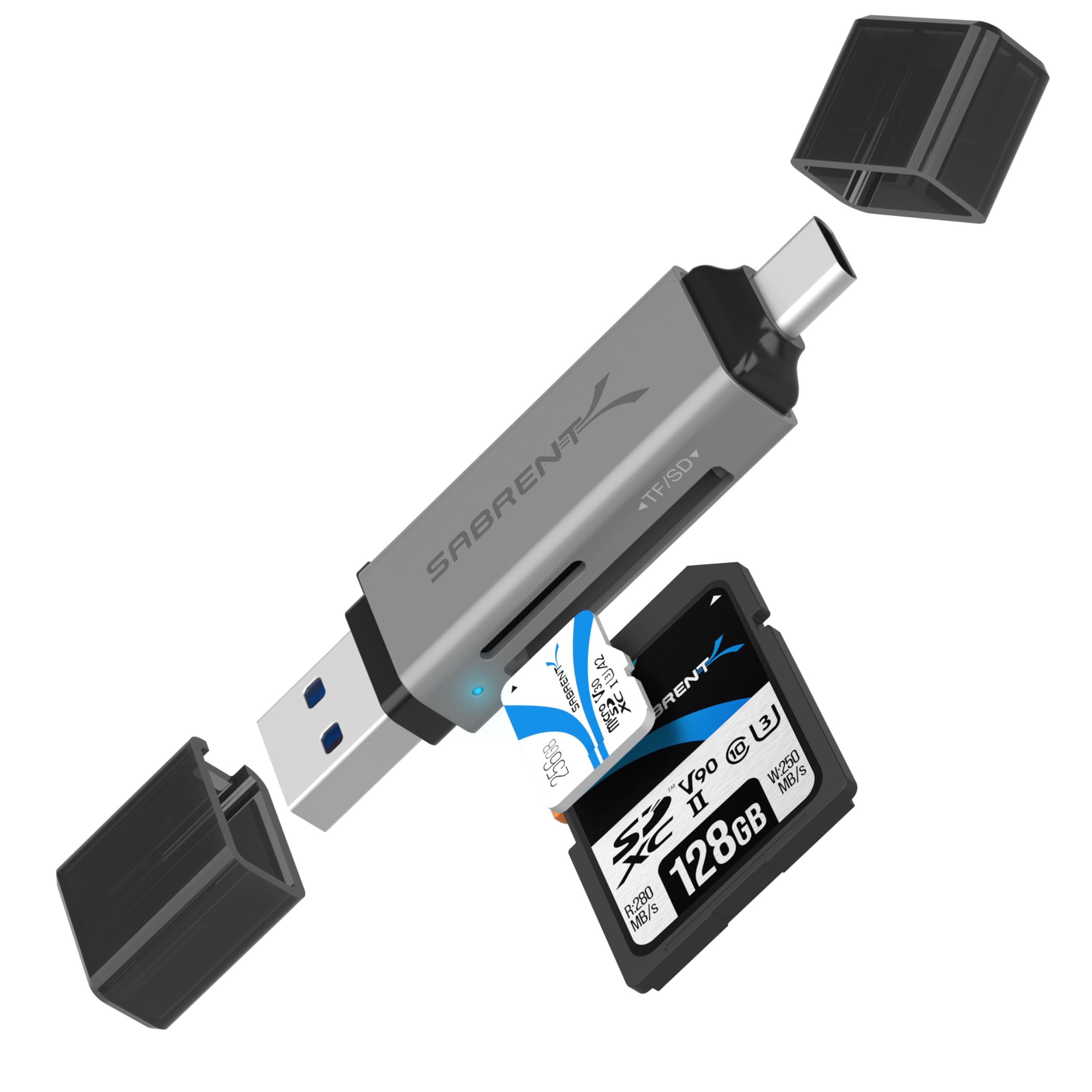
The SABRENT USB-C & USB-A SD/Micro SD Card Reader review is for anyone who wants one small adapter for common SD and microSD cards across newer USB-C and traditional USB-A devices.
Its appeal is straightforward: two card formats, broad port compatibility, and a plug-and-play USB 3.0 connection.
SABRENT Card Reader Review Summary
The quick verdict
2,000+ ratings
Read Amazon ReviewsSABRENT USB-C & USB-A SD/Micro SD Card Reader
A compact option for moving photos and files between SD or microSD cards and devices with USB-C or USB-A ports.
- USB-C and USB-A connections support use with modern USB-C devices and traditional USB-A ports.
- Two slots read SD, SDHC, SDXC, microSD, microSDHC, and microSDXC cards.
- USB 3.0 interface supports transfer speeds up to 5Gbps and works with USB 2.0 hosts.
- Plug-and-play setup requires no drivers or software on Windows, macOS, and compatible Android devices.

Pros
- A single reader offers both USB-C and USB-A connections, reducing the need to choose a port-specific adapter.
- Separate SD and microSD slots cover common camera, dash-cam, and everyday card formats.
Consider before buying
- The up-to 5Gbps figure describes the interface ceiling; card speed, host port, and file size affect real transfer times.
- The described slots focus on SD and microSD families, so buyers using another memory-card format should confirm that their cards are supported.
Read the full review summary
This reader combines a USB-C and USB-A connection with separate SD and microSD slots, making it useful when a camera card needs to move to a laptop, PC, or compatible Android device.
It supports SD, SDHC, SDXC, microSD, microSDHC, and microSDXC cards, covering a broad range of standard memory-card formats.
The design is best suited to people who value portability and flexible connections more than specialized card-reader features.
USB 3.0 offers a theoretical interface speed of up to 5Gbps, with USB 2.0 backward compatibility; actual transfer time depends on the card, host device, and files.
The built-in activity light and no-driver setup round out a simple everyday tool.
The buying factors
SABRENT Card Reader Scorecard
Editorial scores reflect listed features and buyer fit; they are not laboratory measurements or customer ratings.
Port flexibility
USB-C and USB-A connections make it adaptable to newer and traditional host ports.
Card format coverage
It supports several SD and microSD generations, including SDXC and microSDXC.
Transfer interface
USB 3.0 is rated up to 5Gbps, while performance in use will also depend on the card and computer.
Setup simplicity
The plug-and-play design is intended to work without driver or software installation.
Portability
Its lightweight compact design and activity indicator suit a camera bag or laptop kit.
Specialized capability
The described strengths focus on everyday SD and microSD access rather than advanced reader controls.
Key Features and Specifications of SABRENT Card Reader
- USB-C and USB-A connections support use with modern USB-C devices and traditional USB-A ports.
- Two slots read SD, SDHC, SDXC, microSD, microSDHC, and microSDXC cards.
- USB 3.0 interface supports transfer speeds up to 5Gbps and works with USB 2.0 hosts.
- Plug-and-play setup requires no drivers or software on Windows, macOS, and compatible Android devices.
- Compact, lightweight construction is designed for carrying in a pocket, laptop bag, or camera case.
- A built-in LED activity indicator provides a visible cue during reader activity.
Pros and Cons of SABRENT Card Reader
Pros
- A single reader offers both USB-C and USB-A connections, reducing the need to choose a port-specific adapter.
- Separate SD and microSD slots cover common camera, dash-cam, and everyday card formats.
- USB 3.0 provides a fast interface ceiling for compatible hosts and cards.
- No-driver setup and a compact form make it convenient for routine transfers away from a desk.
Consider before buying
- The up-to 5Gbps figure describes the interface ceiling; card speed, host port, and file size affect real transfer times.
- The described slots focus on SD and microSD families, so buyers using another memory-card format should confirm that their cards are supported.
- Compatibility with Android is limited to supported devices, so check the phone or tablet's port and file-access support before relying on it.
Who Should Buy SABRENT Card Reader?
Good fit
Consider this reader if you regularly transfer photos or files from SD and microSD cards and move between computers with USB-C and USB-A ports.
That combination is particularly useful in a shared household or travel kit where devices may not all use the same connection.
It also makes sense for someone who wants a small, uncomplicated reader for common card formats rather than a larger desktop accessory.
The plug-and-play approach keeps setup simple, and the activity light adds a quick visual cue while files are being accessed.
Before buying, match your card format and host device to the stated compatibility.
If speed matters for large video transfers, treat 5Gbps as the USB interface maximum, not a promise of the rate your particular card and computer will achieve.
Who should skip it
Look elsewhere if your workflow depends on a memory-card format beyond SD and microSD, or if you need a reader with specialized capabilities not described here. Confirm your exact card type before choosing.
If you plan to use it with an Android device, check that the device supports file access through its USB port. The compatibility is limited to supported Android devices.
How the SABRENT Card Reader fits a practical transfer setup
One reader for two host connections
Having USB-C and USB-A connections helps bridge newer laptops and phones with older computers or accessories.
It is a useful fit when the reader may travel between devices, though buyers should still check which connection their host supports and how it exposes removable storage.
Card support for common camera media
The two slots cover SD and microSD families through SDXC and microSDXC. That pairing suits many routine camera and small-device transfers; anyone with a less common card should verify the format directly rather than assume it will fit.
Understanding the USB 3.0 speed figure
The stated maximum of up to 5Gbps describes the interface, not a guaranteed copy rate.
A slower card or host connection can constrain transfers, and many small files may take a different amount of time than a few large ones.
Portable, simple operation
A compact lightweight body is easy to pack with a laptop or camera, while plug-and-play setup avoids a separate software step on compatible systems.
The built-in LED is a useful activity cue, but it does not replace checking that a transfer has completed before removing a card.
Alternatives to SABRENT Card Reader
One supplied alternative offers a meaningful difference in listed card formats and operating-system support; the main reader remains the clearer fit when both USB-C and USB-A connections matter.
Computer Memory Card Readers alternative
10,000+ ratings
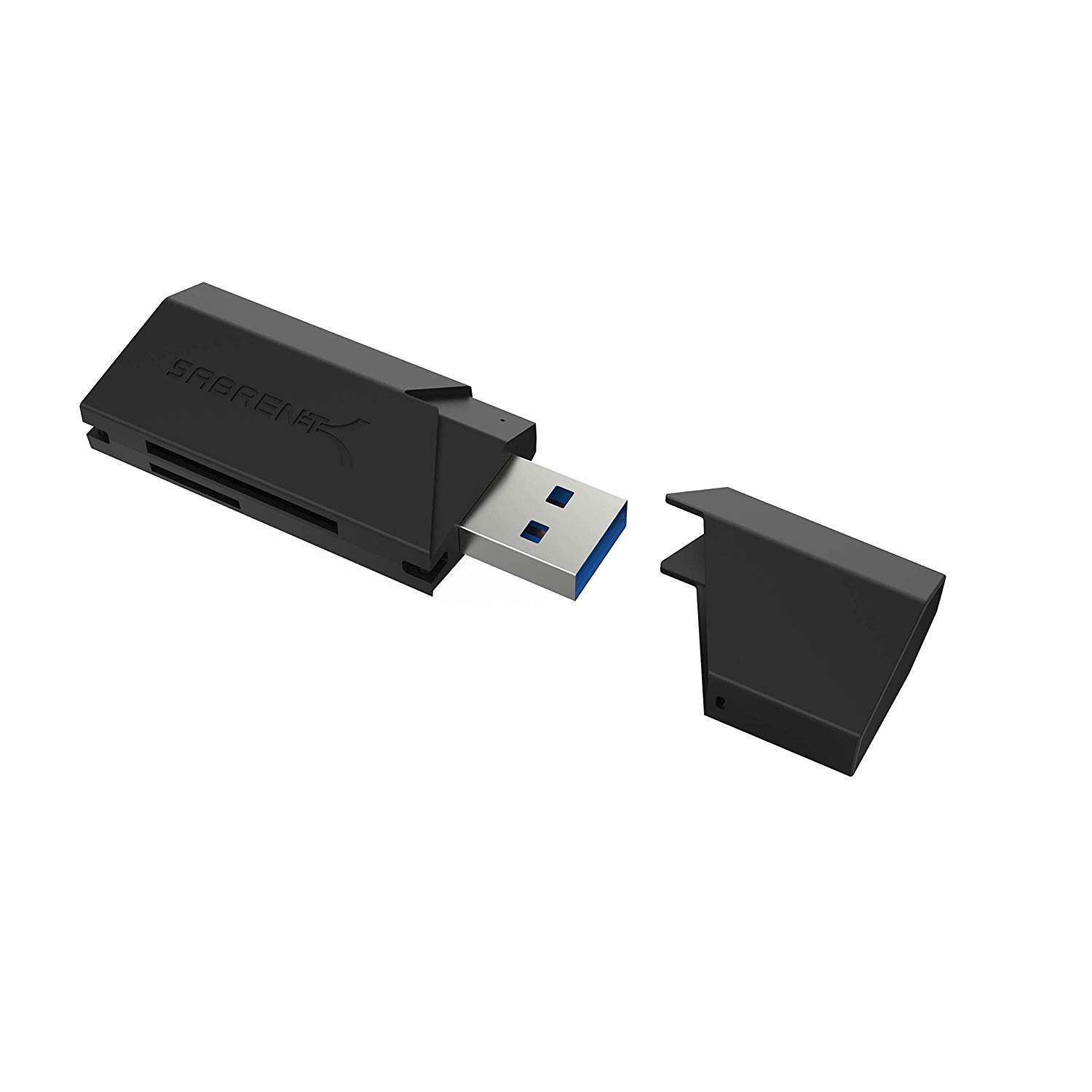
Read Amazon ReviewsSABRENT SuperSpeed 2 Slot USB 3.0 Card Reader (CR-UMSS)
Choose the main reader if having both USB-C and USB-A connections is central to your setup.
Consider the CR-UMSS if its listed MMC and T-Flash support or its stated Linux compatibility better matches your devices; check the exact host connection you need before deciding.
- This two-slot reader uses a USB 3.0 connection with USB 2.0 backward compatibility and supports SD, SDHC, SDXC, MMC, microSD, and T-Flash.
- It is described as plug-and-play, USB-powered, and compatible with Windows, Mac, Linux, and certain Android systems.
- The main reader pairs USB-C and USB-A connections with SD and microSD card support, making it a flexible choice when host ports vary.
Is SABRENT Card Reader Worth It?
The SABRENT USB-C & USB-A SD/Micro SD Card Reader is worth considering as a compact everyday reader for people who use common SD or microSD cards across USB-C and USB-A devices.
Its broad card-family coverage, plug-and-play setup, and USB 3.0 interface make the feature set practical without adding much complexity.
Buy it if those card formats and connections match your routine, while treating the 5Gbps figure as an interface maximum rather than a guaranteed transfer speed.
Check Android compatibility for your specific device, and verify any less common card format before relying on it.
Your review at a glance
2,000+ ratings
Read Amazon ReviewsSABRENT USB-C & USB-A SD/Micro SD Card Reader
A compact option for moving photos and files between SD or microSD cards and devices with USB-C or USB-A ports.
- USB-C and USB-A connections support use with modern USB-C devices and traditional USB-A ports.
- Two slots read SD, SDHC, SDXC, microSD, microSDHC, and microSDXC cards.
- USB 3.0 interface supports transfer speeds up to 5Gbps and works with USB 2.0 hosts.
- Plug-and-play setup requires no drivers or software on Windows, macOS, and compatible Android devices.